English
 Arabic
 French
 Spanish
 Portuguese
 Deutsch
 Turkish
 Dutch
Dutch
 Italiano
 Russian
 Romaian
 Portuguese (Brazil)
 Greek
Greek

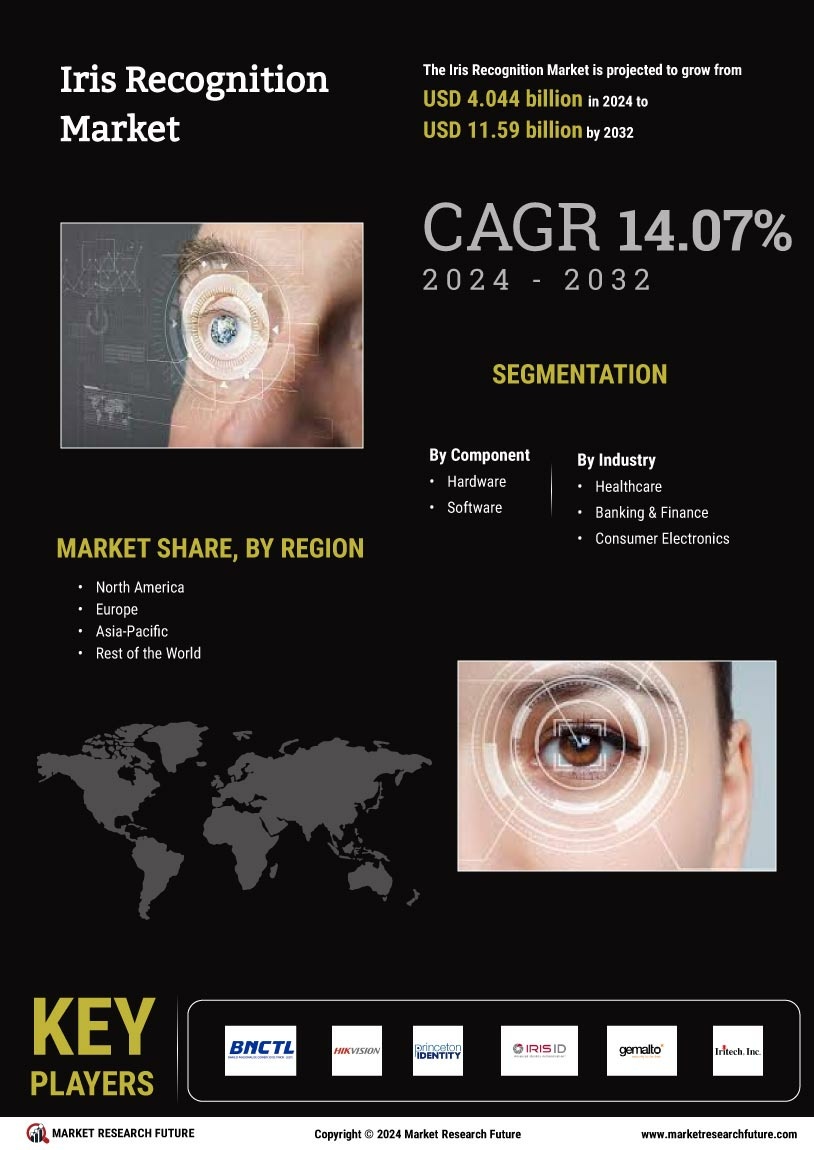
Iris recognition technology is becoming an essential tool for law enforcement agencies worldwide, enhancing their ability to identify individuals accurately and efficiently. The Iris Recognition Market is witnessing significant growth as police departments and security agencies adopt this advanced biometric technology to improve public safety and streamline their operations. The unique patterns of the iris provide a reliable means of identification, making it particularly useful in criminal investigations and security operations.
One of the primary applications of iris recognition in law enforcement is in the identification of suspects and missing persons. Traditional identification methods, such as fingerprinting and facial recognition, can sometimes be unreliable due to poor quality images or changes in appearance. Iris recognition, however, offers a high degree of accuracy, as the iris patterns are unique to each individual and remain stable throughout a person's life. This can be especially beneficial in cases where suspects may attempt to disguise their identity.
Moreover, iris recognition technology can expedite the process of identifying individuals during routine police checks or at crime scenes. By utilizing portable iris scanners, officers can quickly verify identities on the spot, reducing the time spent on investigations and enhancing overall efficiency. This capability is particularly valuable in high-pressure situations where rapid decision-making is crucial.
In addition to identifying suspects, iris recognition can play a significant role in enhancing security at public events and crowded venues. Law enforcement agencies can deploy iris recognition systems to monitor access points and ensure that only authorized individuals are allowed entry. This can help prevent unauthorized access and potential security threats, thereby improving public safety at large gatherings such as concerts, sports events, and political rallies.
The integration of iris recognition technology with existing law enforcement databases can further enhance its effectiveness. By linking iris recognition systems to national databases, law enforcement agencies can quickly cross-reference scanned irises with known offenders or missing persons. This real-time access to information can significantly improve response times and increase the likelihood of resolving cases successfully.
Despite its advantages, the adoption of iris recognition technology in law enforcement is not without challenges. Privacy concerns are a major issue, as the collection and storage of biometric data raise questions about individual rights and data security. Law enforcement agencies must navigate these concerns carefully, ensuring that they comply with legal regulations and establish clear guidelines for the use of biometric data. Transparency in how data is collected, stored, and utilized is essential to maintain public trust.
Additionally, the initial cost of implementing iris recognition systems can be a barrier for some law enforcement agencies, particularly those with limited budgets. However, as technology advances and becomes more affordable, it is expected that more agencies will adopt iris recognition as a standard practice in their operations.
Looking to the future, the potential for iris recognition technology in law enforcement is vast. Continued advancements in technology, such as the development of mobile iris recognition devices, will enhance the capabilities of law enforcement agencies. These portable systems can be used in the field, allowing officers to perform identity checks without the need for bulky equipment.
Furthermore, the combination of iris recognition with other biometric technologies, such as facial recognition and voice recognition, can create a comprehensive identification system that enhances security and accuracy. As these technologies continue to evolve, law enforcement agencies will have access to more robust tools for maintaining public safety and preventing crime.
In conclusion, iris recognition technology is playing an increasingly important role in law enforcement. Its ability to provide accurate and efficient identification makes it a valuable asset in criminal investigations and security operations. As the iris recognition market continues to grow, law enforcement agencies that embrace this technology will be better equipped to address the challenges of public safety in an ever-changing world.@https://www.marketresearchfuture.com/reports/iris-recognition-market-2430
One of the primary applications of iris recognition in law enforcement is in the identification of suspects and missing persons. Traditional identification methods, such as fingerprinting and facial recognition, can sometimes be unreliable due to poor quality images or changes in appearance. Iris recognition, however, offers a high degree of accuracy, as the iris patterns are unique to each individual and remain stable throughout a person's life. This can be especially beneficial in cases where suspects may attempt to disguise their identity.
Moreover, iris recognition technology can expedite the process of identifying individuals during routine police checks or at crime scenes. By utilizing portable iris scanners, officers can quickly verify identities on the spot, reducing the time spent on investigations and enhancing overall efficiency. This capability is particularly valuable in high-pressure situations where rapid decision-making is crucial.
In addition to identifying suspects, iris recognition can play a significant role in enhancing security at public events and crowded venues. Law enforcement agencies can deploy iris recognition systems to monitor access points and ensure that only authorized individuals are allowed entry. This can help prevent unauthorized access and potential security threats, thereby improving public safety at large gatherings such as concerts, sports events, and political rallies.
The integration of iris recognition technology with existing law enforcement databases can further enhance its effectiveness. By linking iris recognition systems to national databases, law enforcement agencies can quickly cross-reference scanned irises with known offenders or missing persons. This real-time access to information can significantly improve response times and increase the likelihood of resolving cases successfully.
Despite its advantages, the adoption of iris recognition technology in law enforcement is not without challenges. Privacy concerns are a major issue, as the collection and storage of biometric data raise questions about individual rights and data security. Law enforcement agencies must navigate these concerns carefully, ensuring that they comply with legal regulations and establish clear guidelines for the use of biometric data. Transparency in how data is collected, stored, and utilized is essential to maintain public trust.
Additionally, the initial cost of implementing iris recognition systems can be a barrier for some law enforcement agencies, particularly those with limited budgets. However, as technology advances and becomes more affordable, it is expected that more agencies will adopt iris recognition as a standard practice in their operations.
Looking to the future, the potential for iris recognition technology in law enforcement is vast. Continued advancements in technology, such as the development of mobile iris recognition devices, will enhance the capabilities of law enforcement agencies. These portable systems can be used in the field, allowing officers to perform identity checks without the need for bulky equipment.
Furthermore, the combination of iris recognition with other biometric technologies, such as facial recognition and voice recognition, can create a comprehensive identification system that enhances security and accuracy. As these technologies continue to evolve, law enforcement agencies will have access to more robust tools for maintaining public safety and preventing crime.
In conclusion, iris recognition technology is playing an increasingly important role in law enforcement. Its ability to provide accurate and efficient identification makes it a valuable asset in criminal investigations and security operations. As the iris recognition market continues to grow, law enforcement agencies that embrace this technology will be better equipped to address the challenges of public safety in an ever-changing world.@https://www.marketresearchfuture.com/reports/iris-recognition-market-2430
Iris recognition technology is becoming an essential tool for law enforcement agencies worldwide, enhancing their ability to identify individuals accurately and efficiently. The Iris Recognition Market is witnessing significant growth as police departments and security agencies adopt this advanced biometric technology to improve public safety and streamline their operations. The unique patterns of the iris provide a reliable means of identification, making it particularly useful in criminal investigations and security operations.
One of the primary applications of iris recognition in law enforcement is in the identification of suspects and missing persons. Traditional identification methods, such as fingerprinting and facial recognition, can sometimes be unreliable due to poor quality images or changes in appearance. Iris recognition, however, offers a high degree of accuracy, as the iris patterns are unique to each individual and remain stable throughout a person's life. This can be especially beneficial in cases where suspects may attempt to disguise their identity.
Moreover, iris recognition technology can expedite the process of identifying individuals during routine police checks or at crime scenes. By utilizing portable iris scanners, officers can quickly verify identities on the spot, reducing the time spent on investigations and enhancing overall efficiency. This capability is particularly valuable in high-pressure situations where rapid decision-making is crucial.
In addition to identifying suspects, iris recognition can play a significant role in enhancing security at public events and crowded venues. Law enforcement agencies can deploy iris recognition systems to monitor access points and ensure that only authorized individuals are allowed entry. This can help prevent unauthorized access and potential security threats, thereby improving public safety at large gatherings such as concerts, sports events, and political rallies.
The integration of iris recognition technology with existing law enforcement databases can further enhance its effectiveness. By linking iris recognition systems to national databases, law enforcement agencies can quickly cross-reference scanned irises with known offenders or missing persons. This real-time access to information can significantly improve response times and increase the likelihood of resolving cases successfully.
Despite its advantages, the adoption of iris recognition technology in law enforcement is not without challenges. Privacy concerns are a major issue, as the collection and storage of biometric data raise questions about individual rights and data security. Law enforcement agencies must navigate these concerns carefully, ensuring that they comply with legal regulations and establish clear guidelines for the use of biometric data. Transparency in how data is collected, stored, and utilized is essential to maintain public trust.
Additionally, the initial cost of implementing iris recognition systems can be a barrier for some law enforcement agencies, particularly those with limited budgets. However, as technology advances and becomes more affordable, it is expected that more agencies will adopt iris recognition as a standard practice in their operations.
Looking to the future, the potential for iris recognition technology in law enforcement is vast. Continued advancements in technology, such as the development of mobile iris recognition devices, will enhance the capabilities of law enforcement agencies. These portable systems can be used in the field, allowing officers to perform identity checks without the need for bulky equipment.
Furthermore, the combination of iris recognition with other biometric technologies, such as facial recognition and voice recognition, can create a comprehensive identification system that enhances security and accuracy. As these technologies continue to evolve, law enforcement agencies will have access to more robust tools for maintaining public safety and preventing crime.
In conclusion, iris recognition technology is playing an increasingly important role in law enforcement. Its ability to provide accurate and efficient identification makes it a valuable asset in criminal investigations and security operations. As the iris recognition market continues to grow, law enforcement agencies that embrace this technology will be better equipped to address the challenges of public safety in an ever-changing world.@https://www.marketresearchfuture.com/reports/iris-recognition-market-2430
·31 Просмотры
·0 предпросмотр