English
 Arabic
 French
 Spanish
 Portuguese
 Deutsch
 Turkish
 Dutch
Dutch
 Italiano
 Russian
 Romaian
 Portuguese (Brazil)
 Greek
Greek

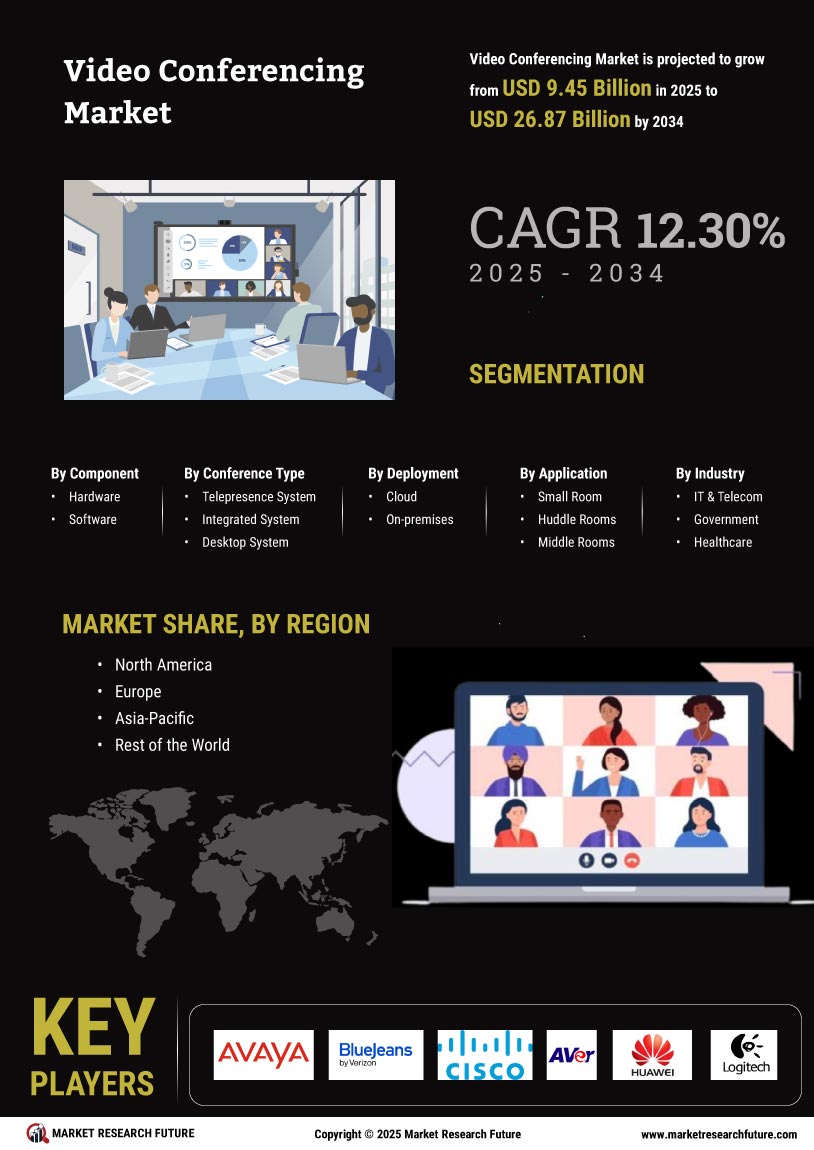
The video conferencing market is characterized by the presence of several key players that shape the competitive landscape. These companies have established themselves as leaders in the industry by offering innovative solutions and catering to the diverse needs of users. Understanding the major players and their strategies is essential for stakeholders looking to navigate the market effectively.
Zoom Video Communications, Inc. is one of the most recognized names in the video conferencing space. Founded in 2011, Zoom gained widespread popularity during the COVID-19 pandemic due to its user-friendly interface and reliable performance. The platform offers a range of features, including virtual backgrounds, breakout rooms, and integrations with other productivity tools. Zoom's ability to scale from small meetings to large webinars has made it a preferred choice for businesses and educational institutions alike.
Microsoft Teams is another major player in the video conferencing market, particularly favored by organizations already utilizing Microsoft Office 365. Teams combines video conferencing capabilities with collaboration tools, allowing users to chat, share files, and work together seamlessly. The integration of Microsoft’s suite of applications enhances the overall user experience, making Teams a comprehensive solution for remote work and communication.
Cisco Webex, a longstanding player in the video conferencing arena, offers a robust platform designed for enterprise-level communication. Webex is known for its strong security features, making it a popular choice for organizations that prioritize data protection. The platform provides various tools for collaboration, including screen sharing, file sharing, and virtual meeting rooms. Cisco's reputation for reliability and security has solidified its position in the market.
Google Meet, part of the Google Workspace suite, has also gained traction as a video conferencing solution. With its integration into Gmail and Google Calendar, users can easily schedule and join meetings with minimal effort. Google Meet emphasizes simplicity and accessibility, making it a popular choice for users who prefer a straightforward video conferencing experience. The platform has also introduced features such as live captions and noise cancellation to enhance usability.
Other notable players in the video conferencing market include BlueJeans, GoToMeeting, and RingCentral. Each of these companies offers unique features and capabilities, catering to specific user needs. For instance, BlueJeans focuses on providing high-quality video and audio experiences, while GoToMeeting emphasizes ease of use and quick setup. RingCentral combines video conferencing with a comprehensive communication platform, allowing users to manage calls, messages, and meetings in one place.
As the video conferencing market continues to evolve, these major players are constantly innovating to stay competitive. They invest in research and development to introduce new features, enhance security measures, and improve user experience. Additionally, partnerships and acquisitions play a significant role in shaping the competitive landscape, as companies seek to expand their offerings and reach new markets.
In conclusion, the video conferencing market is dominated by several key players, each contributing to the industry's growth and development. Companies like Zoom, Microsoft Teams, Cisco Webex, and Google Meet have established themselves as leaders by offering innovative solutions that cater to the diverse needs of users. As the demand for video conferencing continues to rise, these players will play a crucial role in shaping the future of communication technology.@https://www.marketresearchfuture.com/reports/video-conferencing-market-12044
Zoom Video Communications, Inc. is one of the most recognized names in the video conferencing space. Founded in 2011, Zoom gained widespread popularity during the COVID-19 pandemic due to its user-friendly interface and reliable performance. The platform offers a range of features, including virtual backgrounds, breakout rooms, and integrations with other productivity tools. Zoom's ability to scale from small meetings to large webinars has made it a preferred choice for businesses and educational institutions alike.
Microsoft Teams is another major player in the video conferencing market, particularly favored by organizations already utilizing Microsoft Office 365. Teams combines video conferencing capabilities with collaboration tools, allowing users to chat, share files, and work together seamlessly. The integration of Microsoft’s suite of applications enhances the overall user experience, making Teams a comprehensive solution for remote work and communication.
Cisco Webex, a longstanding player in the video conferencing arena, offers a robust platform designed for enterprise-level communication. Webex is known for its strong security features, making it a popular choice for organizations that prioritize data protection. The platform provides various tools for collaboration, including screen sharing, file sharing, and virtual meeting rooms. Cisco's reputation for reliability and security has solidified its position in the market.
Google Meet, part of the Google Workspace suite, has also gained traction as a video conferencing solution. With its integration into Gmail and Google Calendar, users can easily schedule and join meetings with minimal effort. Google Meet emphasizes simplicity and accessibility, making it a popular choice for users who prefer a straightforward video conferencing experience. The platform has also introduced features such as live captions and noise cancellation to enhance usability.
Other notable players in the video conferencing market include BlueJeans, GoToMeeting, and RingCentral. Each of these companies offers unique features and capabilities, catering to specific user needs. For instance, BlueJeans focuses on providing high-quality video and audio experiences, while GoToMeeting emphasizes ease of use and quick setup. RingCentral combines video conferencing with a comprehensive communication platform, allowing users to manage calls, messages, and meetings in one place.
As the video conferencing market continues to evolve, these major players are constantly innovating to stay competitive. They invest in research and development to introduce new features, enhance security measures, and improve user experience. Additionally, partnerships and acquisitions play a significant role in shaping the competitive landscape, as companies seek to expand their offerings and reach new markets.
In conclusion, the video conferencing market is dominated by several key players, each contributing to the industry's growth and development. Companies like Zoom, Microsoft Teams, Cisco Webex, and Google Meet have established themselves as leaders by offering innovative solutions that cater to the diverse needs of users. As the demand for video conferencing continues to rise, these players will play a crucial role in shaping the future of communication technology.@https://www.marketresearchfuture.com/reports/video-conferencing-market-12044
The video conferencing market is characterized by the presence of several key players that shape the competitive landscape. These companies have established themselves as leaders in the industry by offering innovative solutions and catering to the diverse needs of users. Understanding the major players and their strategies is essential for stakeholders looking to navigate the market effectively.
Zoom Video Communications, Inc. is one of the most recognized names in the video conferencing space. Founded in 2011, Zoom gained widespread popularity during the COVID-19 pandemic due to its user-friendly interface and reliable performance. The platform offers a range of features, including virtual backgrounds, breakout rooms, and integrations with other productivity tools. Zoom's ability to scale from small meetings to large webinars has made it a preferred choice for businesses and educational institutions alike.
Microsoft Teams is another major player in the video conferencing market, particularly favored by organizations already utilizing Microsoft Office 365. Teams combines video conferencing capabilities with collaboration tools, allowing users to chat, share files, and work together seamlessly. The integration of Microsoft’s suite of applications enhances the overall user experience, making Teams a comprehensive solution for remote work and communication.
Cisco Webex, a longstanding player in the video conferencing arena, offers a robust platform designed for enterprise-level communication. Webex is known for its strong security features, making it a popular choice for organizations that prioritize data protection. The platform provides various tools for collaboration, including screen sharing, file sharing, and virtual meeting rooms. Cisco's reputation for reliability and security has solidified its position in the market.
Google Meet, part of the Google Workspace suite, has also gained traction as a video conferencing solution. With its integration into Gmail and Google Calendar, users can easily schedule and join meetings with minimal effort. Google Meet emphasizes simplicity and accessibility, making it a popular choice for users who prefer a straightforward video conferencing experience. The platform has also introduced features such as live captions and noise cancellation to enhance usability.
Other notable players in the video conferencing market include BlueJeans, GoToMeeting, and RingCentral. Each of these companies offers unique features and capabilities, catering to specific user needs. For instance, BlueJeans focuses on providing high-quality video and audio experiences, while GoToMeeting emphasizes ease of use and quick setup. RingCentral combines video conferencing with a comprehensive communication platform, allowing users to manage calls, messages, and meetings in one place.
As the video conferencing market continues to evolve, these major players are constantly innovating to stay competitive. They invest in research and development to introduce new features, enhance security measures, and improve user experience. Additionally, partnerships and acquisitions play a significant role in shaping the competitive landscape, as companies seek to expand their offerings and reach new markets.
In conclusion, the video conferencing market is dominated by several key players, each contributing to the industry's growth and development. Companies like Zoom, Microsoft Teams, Cisco Webex, and Google Meet have established themselves as leaders by offering innovative solutions that cater to the diverse needs of users. As the demand for video conferencing continues to rise, these players will play a crucial role in shaping the future of communication technology.@https://www.marketresearchfuture.com/reports/video-conferencing-market-12044
·28 Views
·0 Προεπισκόπηση