English
 Arabic
 French
 Spanish
 Portuguese
 Deutsch
 Turkish
 Dutch
Dutch
 Italiano
 Russian
 Romaian
 Portuguese (Brazil)
 Greek
Greek

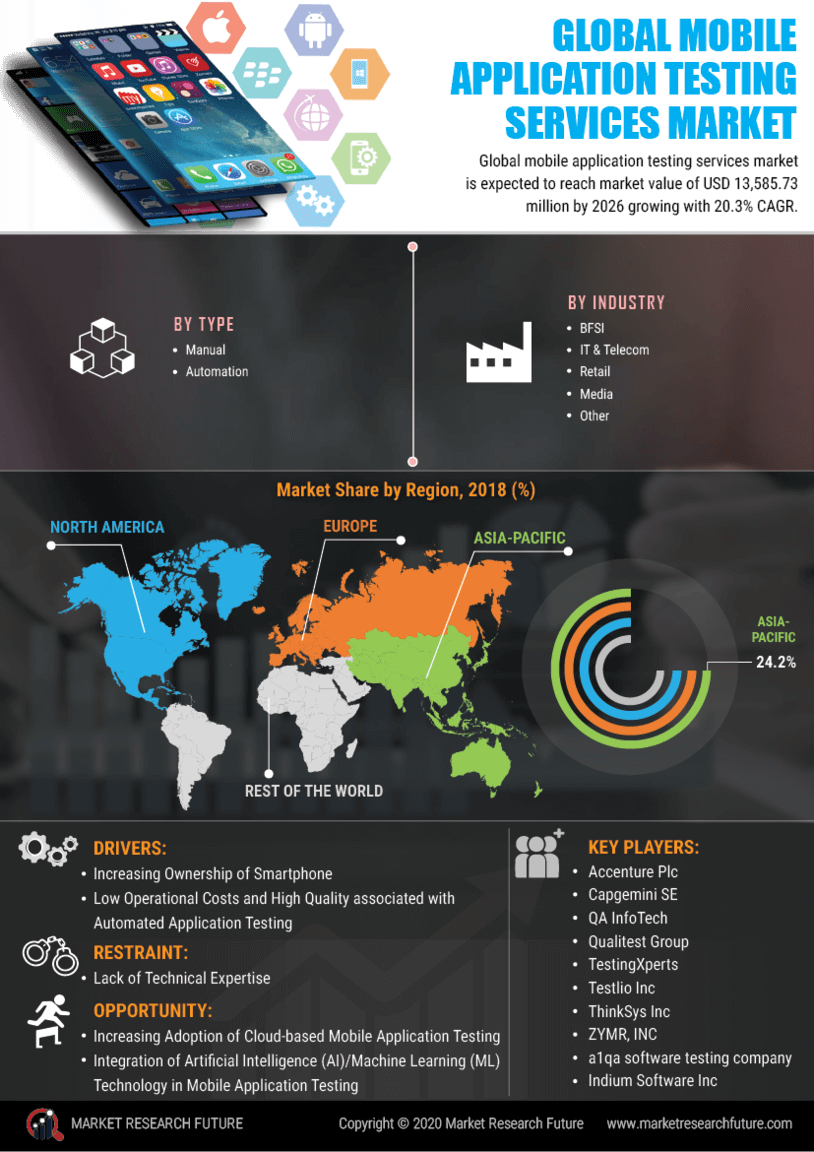
The mobile application testing services market encompasses a variety of testing types, each designed to ensure that applications function optimally across different platforms and devices. The Mobile Application Testing Services Market is vital for businesses seeking to deliver high-quality applications that meet user needs. This article explores the different types of mobile application testing services and their significance in the development process.
Functional testing is one of the primary types of mobile application testing. It focuses on verifying that the application performs its intended functions correctly. This type of testing ensures that all features work as expected, providing a seamless user experience. Functional testing can be conducted manually or through automated testing tools, depending on the complexity of the application.
Performance testing is another crucial aspect of mobile application testing. It assesses the application's responsiveness, stability, and scalability under various conditions. Performance testing helps identify potential bottlenecks and ensures that the application can handle a large number of users without compromising performance. This type of testing is particularly important for applications that experience high traffic or require real-time processing.
Security testing is essential in today's digital landscape, where data breaches and cyber threats are prevalent. This type of testing identifies vulnerabilities within the application and assesses its ability to protect sensitive user information. Security testing involves various techniques, including penetration testing, vulnerability scanning, and risk assessment. By prioritizing security testing, businesses can safeguard user data and maintain trust.
Usability testing focuses on evaluating the user experience of the application. It assesses how intuitive and user-friendly the application is, gathering feedback from real users to identify areas for improvement. Usability testing is crucial for ensuring that users can navigate the application easily and complete tasks without frustration. This type of testing often involves A/B testing, user interviews, and observational studies.
Compatibility testing verifies that the application works seamlessly across different devices, operating systems, and network environments. Given the diverse range of mobile devices available, compatibility testing is essential for ensuring that users have a consistent experience, regardless of their device. This type of testing helps identify any issues related to display, functionality, or performance on various platforms.
Regression testing is another important type of mobile application testing. It involves retesting the application after changes have been made, such as bug fixes or new feature implementations. Regression testing ensures that existing functionality remains intact and that new changes do not introduce new issues. This type of testing is essential for maintaining application quality throughout the development lifecycle.
The mobile application testing services market is also witnessing the emergence of specialized testing services, such as localization testing and accessibility testing. Localization testing ensures that the application is culturally and linguistically appropriate for different regions, while accessibility testing verifies that the application is usable by individuals with disabilities. These specialized testing services are becoming increasingly important as businesses seek to reach diverse audiences.
In conclusion, the mobile application testing services market comprises various testing types, each playing a crucial role in ensuring application quality. From functional and performance testing to security and usability testing, these services help businesses deliver high-quality applications that meet user expectations. By investing in comprehensive testing solutions, companies can enhance their app performance, improve user satisfaction, and gain a competitive advantage in the dynamic mobile application landscape.@https://www.marketresearchfuture.com/reports/mobile-application-testing-services-market-8615
Functional testing is one of the primary types of mobile application testing. It focuses on verifying that the application performs its intended functions correctly. This type of testing ensures that all features work as expected, providing a seamless user experience. Functional testing can be conducted manually or through automated testing tools, depending on the complexity of the application.
Performance testing is another crucial aspect of mobile application testing. It assesses the application's responsiveness, stability, and scalability under various conditions. Performance testing helps identify potential bottlenecks and ensures that the application can handle a large number of users without compromising performance. This type of testing is particularly important for applications that experience high traffic or require real-time processing.
Security testing is essential in today's digital landscape, where data breaches and cyber threats are prevalent. This type of testing identifies vulnerabilities within the application and assesses its ability to protect sensitive user information. Security testing involves various techniques, including penetration testing, vulnerability scanning, and risk assessment. By prioritizing security testing, businesses can safeguard user data and maintain trust.
Usability testing focuses on evaluating the user experience of the application. It assesses how intuitive and user-friendly the application is, gathering feedback from real users to identify areas for improvement. Usability testing is crucial for ensuring that users can navigate the application easily and complete tasks without frustration. This type of testing often involves A/B testing, user interviews, and observational studies.
Compatibility testing verifies that the application works seamlessly across different devices, operating systems, and network environments. Given the diverse range of mobile devices available, compatibility testing is essential for ensuring that users have a consistent experience, regardless of their device. This type of testing helps identify any issues related to display, functionality, or performance on various platforms.
Regression testing is another important type of mobile application testing. It involves retesting the application after changes have been made, such as bug fixes or new feature implementations. Regression testing ensures that existing functionality remains intact and that new changes do not introduce new issues. This type of testing is essential for maintaining application quality throughout the development lifecycle.
The mobile application testing services market is also witnessing the emergence of specialized testing services, such as localization testing and accessibility testing. Localization testing ensures that the application is culturally and linguistically appropriate for different regions, while accessibility testing verifies that the application is usable by individuals with disabilities. These specialized testing services are becoming increasingly important as businesses seek to reach diverse audiences.
In conclusion, the mobile application testing services market comprises various testing types, each playing a crucial role in ensuring application quality. From functional and performance testing to security and usability testing, these services help businesses deliver high-quality applications that meet user expectations. By investing in comprehensive testing solutions, companies can enhance their app performance, improve user satisfaction, and gain a competitive advantage in the dynamic mobile application landscape.@https://www.marketresearchfuture.com/reports/mobile-application-testing-services-market-8615
The mobile application testing services market encompasses a variety of testing types, each designed to ensure that applications function optimally across different platforms and devices. The Mobile Application Testing Services Market is vital for businesses seeking to deliver high-quality applications that meet user needs. This article explores the different types of mobile application testing services and their significance in the development process.
Functional testing is one of the primary types of mobile application testing. It focuses on verifying that the application performs its intended functions correctly. This type of testing ensures that all features work as expected, providing a seamless user experience. Functional testing can be conducted manually or through automated testing tools, depending on the complexity of the application.
Performance testing is another crucial aspect of mobile application testing. It assesses the application's responsiveness, stability, and scalability under various conditions. Performance testing helps identify potential bottlenecks and ensures that the application can handle a large number of users without compromising performance. This type of testing is particularly important for applications that experience high traffic or require real-time processing.
Security testing is essential in today's digital landscape, where data breaches and cyber threats are prevalent. This type of testing identifies vulnerabilities within the application and assesses its ability to protect sensitive user information. Security testing involves various techniques, including penetration testing, vulnerability scanning, and risk assessment. By prioritizing security testing, businesses can safeguard user data and maintain trust.
Usability testing focuses on evaluating the user experience of the application. It assesses how intuitive and user-friendly the application is, gathering feedback from real users to identify areas for improvement. Usability testing is crucial for ensuring that users can navigate the application easily and complete tasks without frustration. This type of testing often involves A/B testing, user interviews, and observational studies.
Compatibility testing verifies that the application works seamlessly across different devices, operating systems, and network environments. Given the diverse range of mobile devices available, compatibility testing is essential for ensuring that users have a consistent experience, regardless of their device. This type of testing helps identify any issues related to display, functionality, or performance on various platforms.
Regression testing is another important type of mobile application testing. It involves retesting the application after changes have been made, such as bug fixes or new feature implementations. Regression testing ensures that existing functionality remains intact and that new changes do not introduce new issues. This type of testing is essential for maintaining application quality throughout the development lifecycle.
The mobile application testing services market is also witnessing the emergence of specialized testing services, such as localization testing and accessibility testing. Localization testing ensures that the application is culturally and linguistically appropriate for different regions, while accessibility testing verifies that the application is usable by individuals with disabilities. These specialized testing services are becoming increasingly important as businesses seek to reach diverse audiences.
In conclusion, the mobile application testing services market comprises various testing types, each playing a crucial role in ensuring application quality. From functional and performance testing to security and usability testing, these services help businesses deliver high-quality applications that meet user expectations. By investing in comprehensive testing solutions, companies can enhance their app performance, improve user satisfaction, and gain a competitive advantage in the dynamic mobile application landscape.@https://www.marketresearchfuture.com/reports/mobile-application-testing-services-market-8615
·29 Vue
·0 Aperçu